
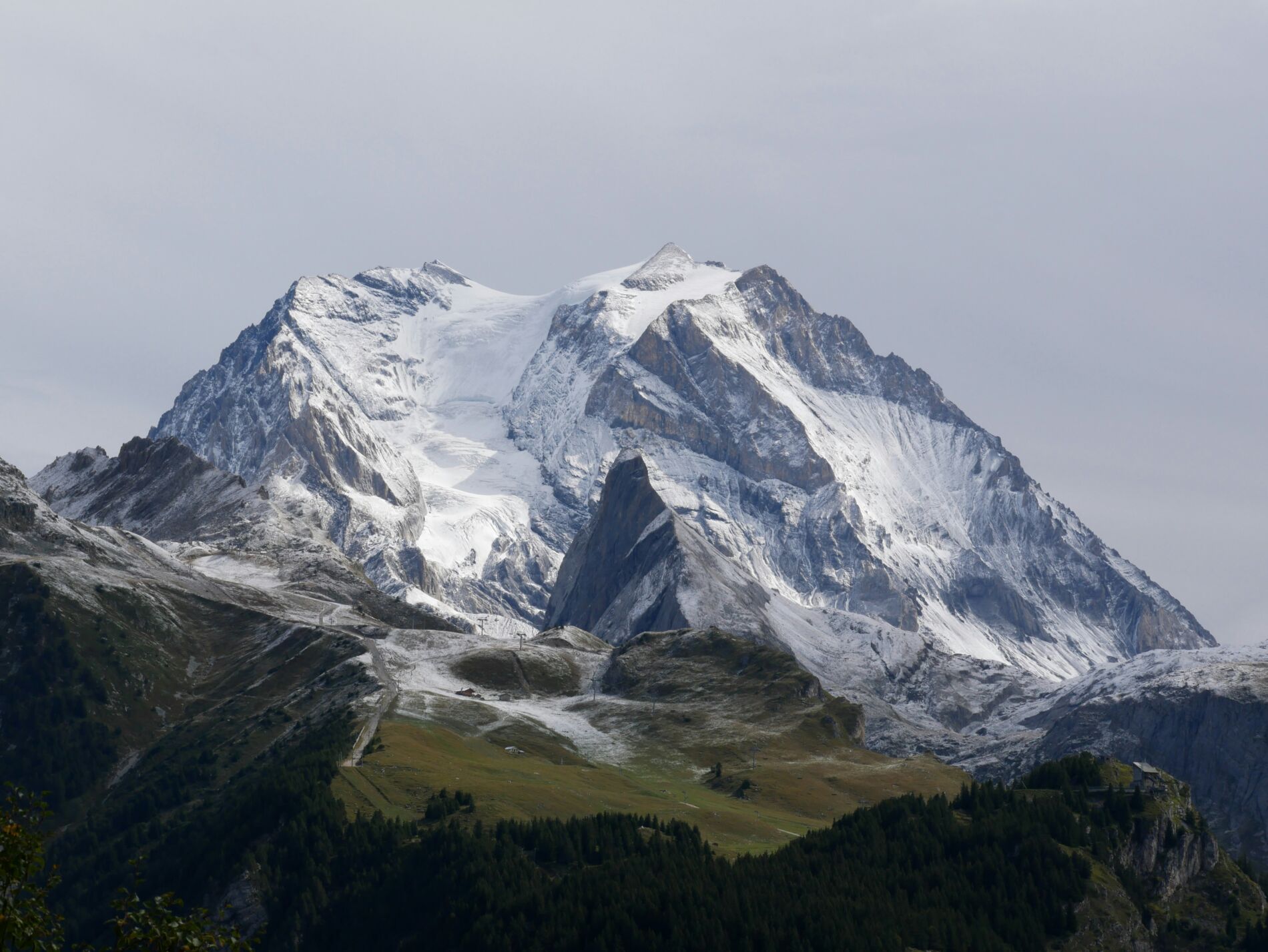
High-altitude communities are having to grapple with a seismic change. In other words, global warming is causing temperatures in the mountains to rise faster than the global average. In an effort to safeguard winter activities while reducing the impact on the planet, action must be taken in the areas generating the highest emissions, which especially concerns snow grooming vehicles.
According to data published in 2024 by the sector’s professionals, snow grooming is responsible for 90 to 95% of the direct emissions from a ski area (Domaines Skiables de France, environmental summary 2024). On average, a snow groomer guzzles between 30 and 40 litres of fuel every hour, i.e. up to 400 litres a night for the busiest machines. Over the course of a season, that equates to between 250,000 and 350,000 litres per resort, which has a direct impact on both the planet and mountain towns and communities. This explains why hydrogen is shaping up to be a relevant solution for the future of the resorts’ fleet of snow groomers.
Want to find out more about this subject? Then come along to the 2026 Mountain Planet show. Registrations are open!
Mountains and resources: when Mother Earth creates the solutions
Mountains are caused by millions of years of movement in the Earth’s crust and tectonic plates, together with compressive forces. Their complex geological structure, featuring a wide range of rock types, faults and deep-flowing fluids, serves as a reminder that resources are intimately related to the dynamic forces shaping the Earth. The interactions between water, certain rock types and the heat from the Earth’s mantle are currently being studied in a number of European scientific programmes (BRGM, IFPEN, publications 2024–2025).
Their investigations reveal how deep geochemical reactions have led to the presence of natural hydrogen, sometimes called white hydrogen, without any direct human involvement. These phenomena can especially be seen in mountainous areas, where active tectonics allow fluids to flow, meaning that each territory can be likened to a natural laboratory for testing new energy solutions (BRGM, “Natural Hydrogen and Geological Contexts” report, 2024).
From geology to real-life uses of hydrogen in mountain resorts
Although natural hydrogen is still in the exploratory stages, industrial applications for hydrogen are quickly gaining traction in the mountains. Heavy goods vehicles are high on the priority list for switching over to hydrogen due to their range and power constraints as well as weather conditions.
In April 2024, Moûtiers, Courchevel and Tignes (GART / France Hydrogène) led an official demonstration of a hydrogen ecosystem in a mountain resort. A refuelling station installed in the valley showed that a capacity of 200 kg a day was sufficient for powering heavy goods vehicles operating at altitude. During testing, a fuel cell bus (producing electricity from hydrogen and oxygen in the air) achieved an average range of 350 km in winter conditions, with a recharging time of less than 20 minutes, even during sub-zero temperatures, which proves that hydrogen is compatible with the specific constraints associated with the mountains.
Snow groomers and measured impacts
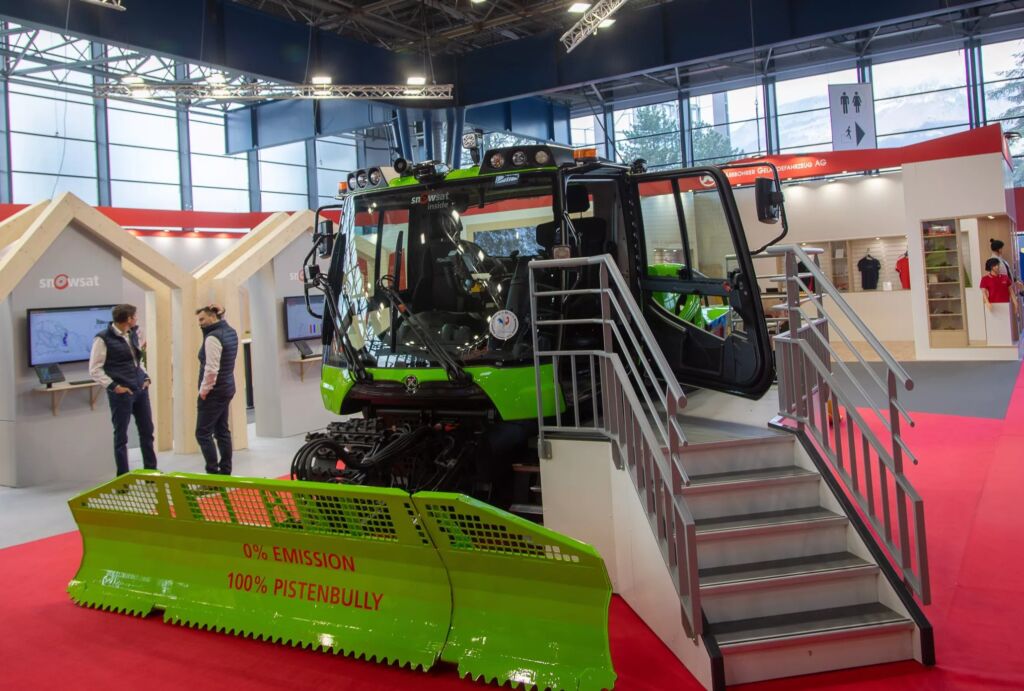
@Mountain Planet
The technical scenarios published in 2025 by France Hydrogène and several tech hubs across the Alps estimate that replacing five fuel-powered snow groomers with hydrogen models could prevent 700 to 900 tons of CO₂ emissions every year for a mid-sized resort, representing a huge reduction in the direct emissions from snow grooming vehicles in the mountains. These figures confirm that using hydrogen as a fuel is no longer a theoretical concept, but actually a solution that has been tested and measured in similar conditions to those typically found in the ski areas.
Water, geology, planet and regional responsibility
Water resources are key to maintaining balance in mountain resorts. They play an essential role in snow production and are also involved in generating hydrogen through electrolysis. The projects trialled in 2024 and 2025 are mainly based on this technology, where the only emissions are water vapour, which is a major asset for preserving mountain ecosystems.
Driving down the gas emissions from heavy goods vehicles also helps ease local pressure on the planet, particularly in areas that are sensitive to climate change.
Innovation and the future for mountain resorts
Recent research has shown that the Earth continually produces natural resources from the deep-lying interactions between rocks, water and the mantle. Shaped by these geological forces, mountains are fast becoming a strategic testbed for solutions inspired by the very way in which the planet works (BRGM, 2024). This report states that mainland France has proven natural hydrogen potential in the Aquitaine Basin, the Pyrenean Piedmont area and the Saar-Warndt coal mining basin.
Resorts could ultimately make the most of their geological structure to lead innovative energy projects in line with the actual situation on the ground without having to build infrastructure and facilities across the landscape.
Natural hydrogen: a solution for the future of the mountains
The data published in 2024 and 2025 reveal that mountain communities are already taking steps to convert their snow grooming vehicles. By drawing on their understanding of the Earth, the different rock types and the dynamic forces of the Earth’s mantle, stakeholders now have access to real actionable strategies for reducing their fossil fuel use and their impact on the planet.
Whether produced locally or through natural processes, hydrogen is an integral part of a credible and measurable decarbonisation pathway. It stands as one of the key solutions for supporting the future of the country’s mountain resorts while preserving the deep-lying balances in the mountains.
Does your company propose innovative solutions? Then take part in the Innovation Awards at the 2026 Mountain Planet show!
a lire également
Sustainable development

24 September 2025
The Mountains and the 2030 Winter Olympics: a golden opportunity to blaze a sustainable trail for innovation across the communities in the French Alps
The announcement that the 2030 Olympic and Paralympic Winter Games will be held in France has once against thrust the French Alps into the global spotlight. The Games will clearly ...
Sustainable development
27 June 2024
The Revival of Leisure Real Estate in the Mountains
During the 2024 edition of the Mountain Planet trade show, several highly anticipated conferences took place. These focused on the topic of energy renovation for mountain housing. Indeed, the building ...
Sustainable development

27 May 2024
Eco-responsible tourism in the mountains, for a sustainable future
SUSTAINABLE DEVELOPMENT In April 2024, mountain stakeholders gathered in Grenoble Alpes Métropole, France. At the Mountain Planet trade show, 23,000 professionals exchanged ideas and shared their vision for the present and ...
