
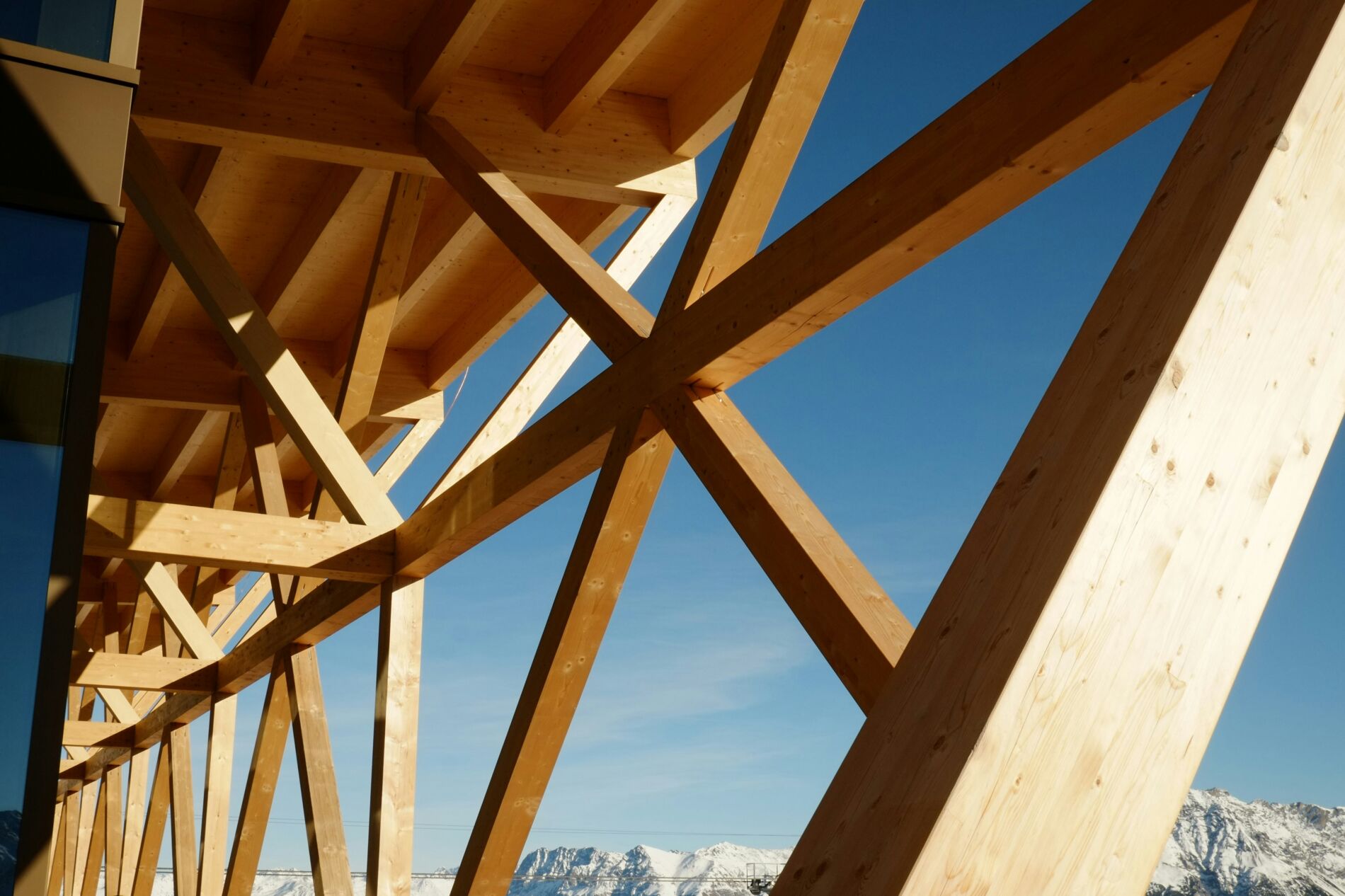
There is a lot more to the Alps than a playground for winter sports fans and hiking enthusiasts. The Alps are home to a wealth of natural resources, and the construction industry is starting to fully tap into those reserves. Under growing pressure from today’s climate challenges and France’s new environmental regulations, mountain industry professionals are refocusing their sights on local bio-based materials, especially timber, as they look to take mountain construction practices back to the drawing board.
Why bio-based materials are gaining traction in the mountain construction sector
People in the mountains have always built their constructions with whatever is available to hand. In most cases, the materials used are sourced from the local area, which explains why some chalets are built from spruce and barns made from larch. The Industrial Revolution almost consigned these traditional techniques to the history books as society switched over to such products as steel, concrete and synthetic insulating materials.
The rekindled interest in bio-based materials can be put down to strategic reasons. Mountain buildings are subjected to extreme conditions. The bio-based materials used by our ancestors have actually proven to be an effective solution against the cold winter temperatures and humidity swings found in the mountains, without forgetting the key role that they can play in addressing the major challenge of scaling down the construction industry’s carbon footprint. In France, the building sector is responsible for producing 25% of the country’s greenhouse gas emissions (source: BBCA – Association for the Development of Low-Carbon Buildings) and up to 43% of France’s total energy consumption (source: Ministry for the Ecological Transition / CITEPA).
Mountain timber: the cornerstone of a sector that needs reinventing
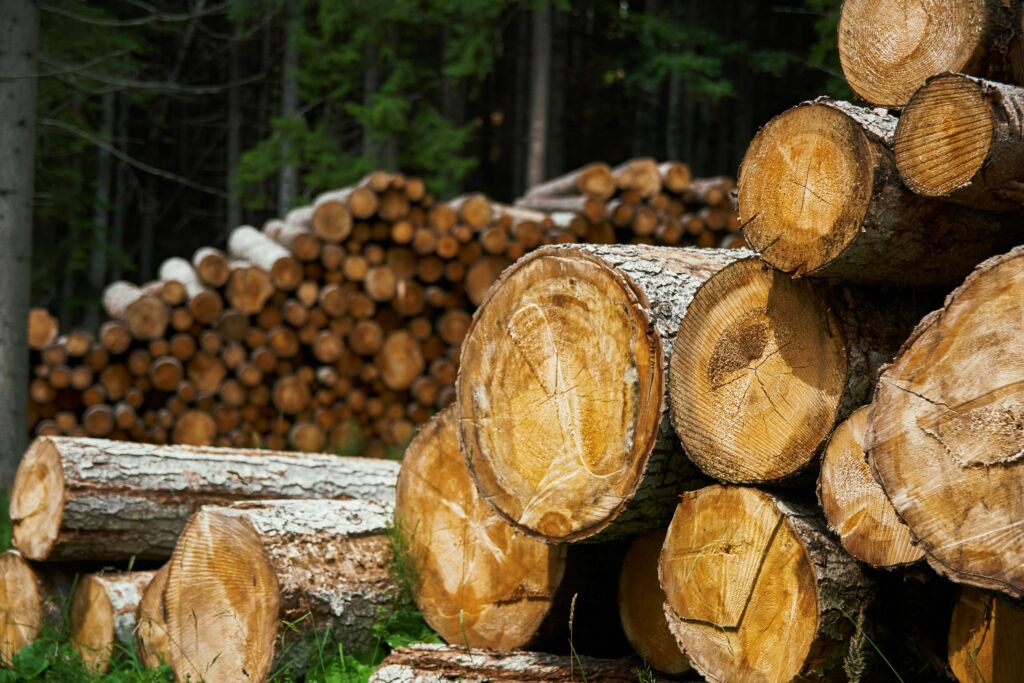
Timber is one of the leading bio-based materials in mountainous areas. Sprawling across millions of hectares in France, mountain forests harbour tremendous production potential. However, the sector is struggling to develop an effective organisational structure on a local level. Sawmills and plants producing laminated solid wood panels often tend to be concentrated far from mountain construction sites.
©nicola-pavan
Nevertheless, initiatives are starting to emerge. In the Alps, Jura Mountains and Pyrenees, forest cooperatives are coming together to offer bio-based products that are processed on site, which cuts down on transport-related emissions and bolsters the local economy. This local approach supports the business model championed by timber chalet manufacturers.
Learn more about sustainable forest management practices
Hemp, straw and plant fibres alongside timber
Straw can be compressed into bundles and panels. It is one of the bio-based products that feature exceptional insulating properties and a very low carbon footprint. Several pilot projects in the Alps are trialling techniques that combine timber-frame buildings with straw insulation, and results have been encouraging. Meanwhile, linen fibres and cellulose wadding are increasingly being incorporated into the systems used to insulate new builds and renovations on account of their guaranteed low grey energy cost and long-term carbon storage.
Standout projects
The number of projects involving bio-based materials continues to surge in both France and abroad, sending out a clear signal that the mountain-timber sector has evolved beyond the experimental phase.
Le Corbier (south-eastern France)
In 2022, MMV’s L’Étoile des Sybelles rental apartment complex was inaugurated as the first building in a ski resort with a fully modular timber construction. Built at an altitude of 1,550 m, the complex spans a surface area of 10,000 sqm over eight floors and boasts a 30% fall in CO₂ emissions and a 30 to 40% reduction in construction waste compared to a conventional construction project. The residence shines a light for the use of bio-based materials across the entire construction sector in France.
Schilthorn (Bernese Alps, Switzerland)
Perched at an altitude of close to 3,000 m, the hospitality facilities at this legendary site have been rebuilt using local timber. The building not only offers high structural performance, but also blends seamlessly into the local environment, which illustrates how bio-based timber is capable of meeting the most demanding construction requirements in high-altitude areas.
Vorarlberg (Austria)
Since the 1980s, this Alpine state on the Swiss border has carved an international reputation for blazing a trail in sustainable timber-based mountain architecture. By harnessing local forest resources, Vorarlberg has built a complete sector to promote the use of bio-based materials, involving sawmills, architects and construction firms. Since 2007, all new public buildings need to comply with “passive house” standards, which continue to inspire thousands of professionals today.
Mjøstårnet (Norway)
Standing 85 metres high, this 18-storey tower was built in 2019, featuring apartments, offices and a hotel. The tower demonstrates that bio-based timber can be used as a replacement for concrete and steel in high-rise mixed-use buildings with a short supply chain and a much smaller carbon footprint.
Research and development powering the sector
These projects with their bio-based materials would never have seen the light of day without continual efforts to drive research and development. In France, such organisations as the FCBA technology institute are working alongside mountain construction professionals to characterise the properties of local products, test how plant fibres behave in cold environments, and update the technical standards and practices. These efforts bring even greater credibility to the mountain-timber sector, and insurance companies are opening up to the use of these materials, with support from local authorities.
Local bio-based products are on their way to becoming a key asset for achieving differentiation in the market, and the Mountain Planet exhibition fully embraces this dynamic trend. The show also brings together mountain construction professionals (architects, builders, elected officials and ski area operators) in shaping the sustainable building industry of the future. With properly managed forest resources, well-organised sectors, and innovative research-driven products, the mountains have all the cards to become a large-scale laboratory for low-carbon construction.
Discover the highlights of Mountain Planet 2026 through a selection of photos from the exhibition.
a lire également
Sustainable development
20 May 2026
Snow farming: a solution for adapting to climate change
With temperatures continuing to rise unabated and heatwaves striking mountain regions with greater intensity, ski resorts and local authorities need to adapt their models. Snow farming, or the practice of ...
Sustainable development
19 January 2026
Green hydrogen in mountain resorts: fuelling snow groomers in tomorrow’s world
High-altitude communities are having to grapple with a seismic change. In other words, global warming is causing temperatures in the mountains to rise faster than the global average. In an ...
Sustainable development

24 September 2025
The Mountains and the 2030 Winter Olympics: a golden opportunity to blaze a sustainable trail for innovation across the communities in the French Alps
The announcement that the 2030 Olympic and Paralympic Winter Games will be held in France has once against thrust the French Alps into the global spotlight. The Games will clearly ...
