
With temperatures continuing to rise unabated and heatwaves striking mountain regions with greater intensity, ski resorts and local authorities need to adapt their models. Snow farming, or the practice of storing snow outside winter, is gaining traction as an innovative solution for addressing the energy, environmental and operational challenges facing today’s world.
Resorts can use the snow farming technique to store piles of snow from one season to the next, which has the upside of reducing their dependence on the energy and water-intensive process of producing artificial snow. It is fully consistent with a global approach aimed at promoting a sustainable transition and improving resource use.
A thermal system for reducing the impact of heat
Snow farming is based on a simple storage system that involves preserving snow by shielding it against the effects of heat and sunlight. Snow is formed into piles and then covered with insulating materials to minimise heat transfers with the outside air.
This system acts like a natural thermal regulator. It restricts the flow of heat, which helps maintain a low internal temperature despite what are sometimes extreme summer weather conditions. The ground also plays an important role, since a cold and openly exposed surface will significantly improve storage performance.
→ According to a study by the Institute for Snow and Avalanche Research, the amount of snow lost during snow farming varies between 13% and 50%, with an average figure of around 28% depending on summer weather conditions.
A major issue for mountain resorts
Producing artificial snow is one of the largest cost items in a ski area’s energy bill. It requires a complex set of equipment and facilities, and depends heavily on temperature conditions. Whereas snowmaking needs large quantities of water and draws a significant amount of power, especially for the compression and spraying systems, snow farming delivers a tangible response. By preserving their existing snow, ski resorts can:
- Drive down their energy use
- Reduce their technical infrastructure needs
- Ease the pressure on water resources
- Improve their overall energy performance
Interested in this and many other subjects?
Head over to the Mountain Planet 2026 show at 10 am on 21 April to check out the essential “International Report on Snow & Mountain Tourism”.
Recent initiatives in France
Métabief – 2026: a clear energy strategy
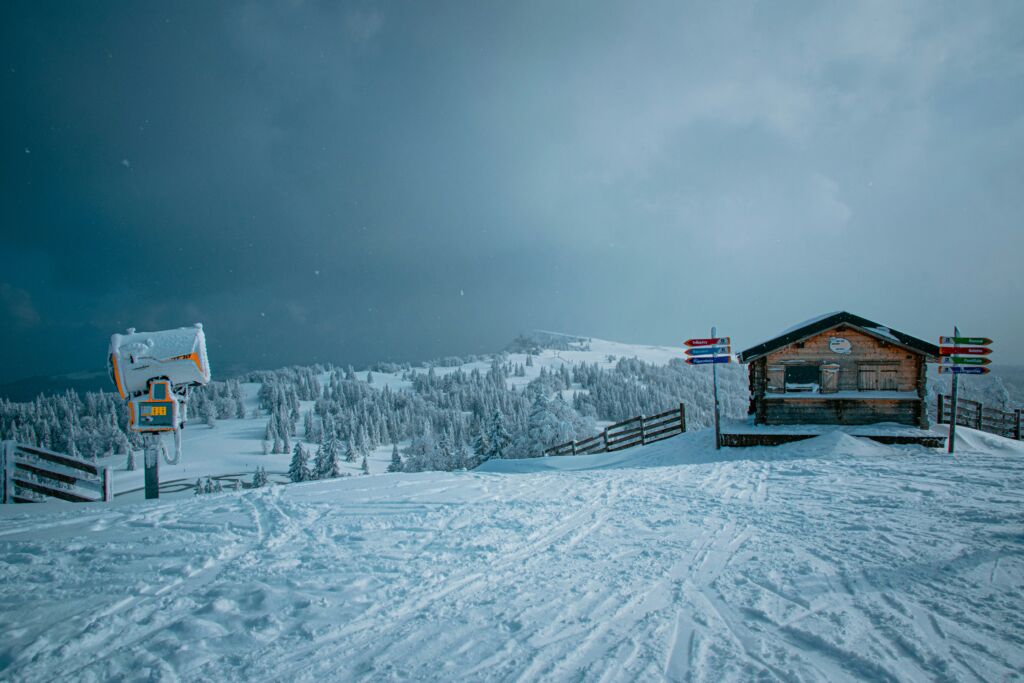
@matthieu-lemarchal – Métabief ski resort
In 2026, Métabief ski resort in eastern France trialled its own snow farming project by storing approximately 8,000 m³ of snow, including a second pile measuring 6,000 m³.
With the aim of preserving up to 80% of the volume despite the heat of the summer season. The investment set the resort back an estimated €90,000, although the equipment involved can be used over and over again for the next 10 to 15 years. This project is fully in line with Métabief’s energy reduction strategy, since less snow needs to be produced at the start of the season (source: Le Parisien 14/04/2026)
Bessans – 2025: a model designed for greater thermal and energy performance
Bessans ski resort has been using the snow farming technique for several years. In 2025, several thousand cubic metres of snow were stored, so that the operators could kick off the Nordic skiing season even earlier. The site has been chosen (orientation, ground quality, and low exposure to sunlight) to optimise thermal transfers and limit the effects of heat. This approach has directly improved the site’s performance.
A European initiative driven by the energy transition
Snow farming has already entered the mainstream in Scandinavia and Switzerland. According to the Institute for Snow and Avalanche Research (2024 study), close to 90% of ski resort operators are familiar with the technique, and approximately 15% are planning to roll it out in the short term.
Resorts such as Davos and Levi are storing their snow to ensure that they can open for business as early as autumn, even when temperature conditions are less than ideal.
This initiative dovetails seamlessly with the various energy transition strategies spearheaded across Europe.
Incorporation into global energy strategies
Mountain resorts can add snow farming to their existing sustainable development initiatives, such as developing solar power, improving the heating systems in each building, increasing thermal performance, and rolling out solutions involving heat exchangers. These actions can give resorts greater control over the heat flows and reinforce their facilities’ ability to withstand the effects of climate change.
Learn more about renewable energies in ski resorts
Limitations and prospects
Despite its advantages, snow farming does have a few vulnerabilities:
- Intense heatwaves
- Exposure to solar radiation
- Ground characteristics
- Storage capacities
Even though only a limited amount of snow can be preserved, it boasts tremendous energy value, since each cubic metre stored prevents resorts from having to produce extra artificial snow.
A key solution for driving the energy transition
Snow farming provides mountain industry professionals with a tangible solution for tackling climate change. By lowering energy needs, improving storage and limiting the effects of heat, it allows communities to fully engage with the energy transition. Resorts, local authorities and manufacturers now have access to an operational solution for building a more sustainable model that combines thermal performance, innovation and energy efficiency.
a lire également
Sustainable development
29 May 2026
Local bio-based materials: promoting sustainable construction practices with the mountain-timber sector
There is a lot more to the Alps than a playground for winter sports fans and hiking enthusiasts. The Alps are home to a wealth of natural resources, and the ...
Sustainable development

19 January 2026
Green hydrogen in mountain resorts: fuelling snow groomers in tomorrow’s world
High-altitude communities are having to grapple with a seismic change. In other words, global warming is causing temperatures in the mountains to rise faster than the global average. In an ...
Sustainable development

24 September 2025
The Mountains and the 2030 Winter Olympics: a golden opportunity to blaze a sustainable trail for innovation across the communities in the French Alps
The announcement that the 2030 Olympic and Paralympic Winter Games will be held in France has once against thrust the French Alps into the global spotlight. The Games will clearly ...
